
Buying Off-Plan Property in Croatia: Protect Your Payments
01/08/2026
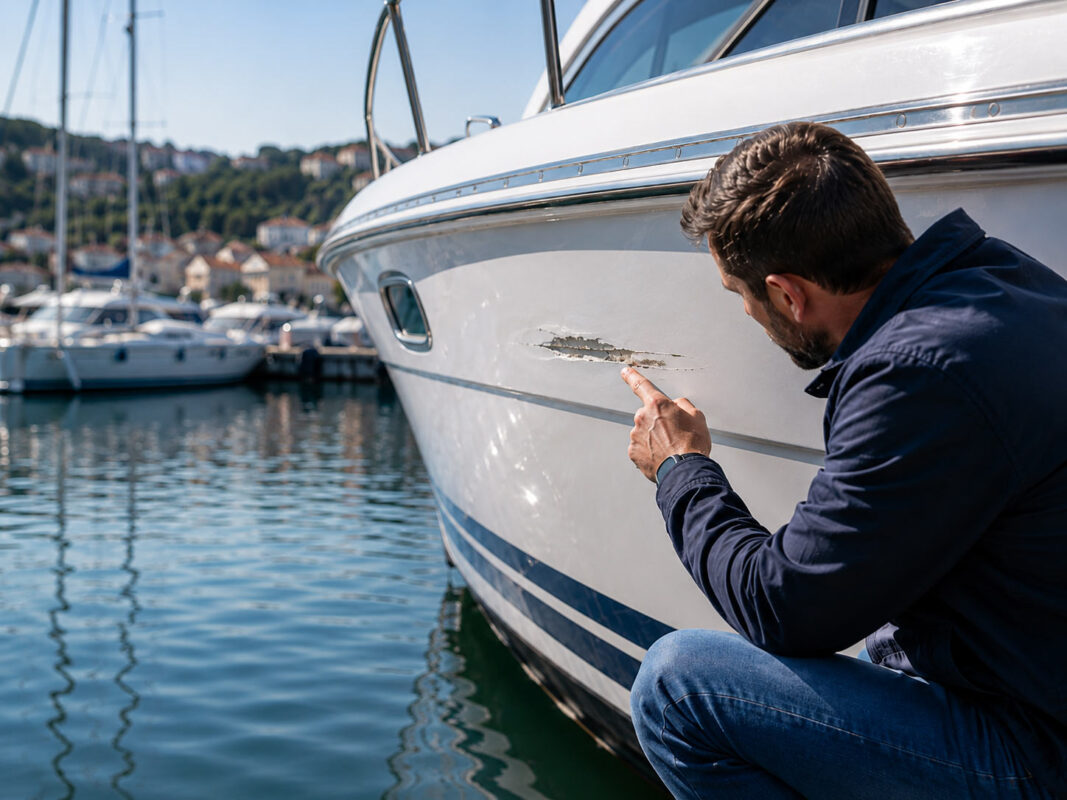
Buying a boat or yacht is a major financial decision. Although a vessel may appear well maintained and technically sound, a professional marine survey can reveal serious damage that was not disclosed in the listing, the purchase agreement or the documentation supplied by the seller.
Problems may be discovered during the pre-purchase survey, before final delivery, or several weeks or months after completion. The buyer will then understandably ask whether they can withdraw from the transaction, terminate an already signed agreement, recover the purchase price or deposit, and claim compensation from the seller.
The answer depends on the wording of the contract, the nature and seriousness of the defect, when it was discovered, the legal status of the parties and whether the buyer acted within the applicable time limits.
This guide explains the buyer’s rights when hidden defects are discovered in a boat, yacht, sailing yacht, catamaran or other vessel purchased in Croatia.
A hidden or latent defect is generally a defect that existed when risk passed to the buyer, or arose from a cause that already existed at that time, but could not reasonably have been identified during an ordinary inspection of the vessel.
Under Croatian contract law, a seller may be liable for material defects that existed when risk passed to the buyer even if the seller was not aware of them. The seller may also be liable for a defect that becomes apparent later if it results from a cause that existed before delivery.
Common examples of hidden defects in boats and yachts include:
Not every malfunction is automatically a hidden defect. When a used boat is purchased, its age, previous use, engine hours, maintenance history and ordinary wear and tear must be taken into account.
However, the fact that a vessel is second-hand does not require the buyer to accept serious undisclosed damage or a condition that materially differs from the listing, contract or seller’s representations.
A material defect may exist where the vessel:
For example, a vessel may have been advertised as “never damaged”, “in excellent condition” or “ready to sail”. If the marine survey subsequently reveals significant earlier hull damage, the buyer may argue that the vessel lacks the agreed or reasonably expected characteristics.
The original listing, emails, messages, photographs, service records and statements made by the seller or broker may therefore become important evidence.
A visible defect is one that could reasonably have been identified during an ordinary inspection. Examples may include obvious hull damage, missing equipment or a clearly malfunctioning device.
A hidden defect could not reasonably be identified during an ordinary inspection. Its discovery may require a professional marine survey, a haul-out, sea trial, engine diagnostics, moisture readings or access to concealed parts of the vessel.
The distinction matters because Croatian law imposes specific notification periods. A buyer who discovers a defect should act promptly and should not continue using the boat as though no problem exists, particularly where further use may increase the damage.
An independent pre-purchase survey is one of the most important pieces of evidence in a dispute concerning hidden defects in a boat or yacht.
A qualified marine surveyor may be able to establish:
The buyer should, wherever possible, obtain a detailed written report supported by photographs, measurements and an estimate of repair costs. A brief oral comment from a mechanic or surveyor will usually carry less evidential weight if a dispute arises.
A buyer who has notified the seller of the defect correctly and within the applicable deadline may, depending on the circumstances, be entitled to:
The buyer may also be entitled to withhold any unpaid part of the purchase price until the seller complies with their obligations relating to the material defect.
In the sale of an individually identified used boat or yacht, replacement with another vessel will often be impossible. Disputes therefore usually concern repair, a reduction in price, or termination of the boat purchase agreement and repayment of the money paid.
A buyer is not normally entitled to terminate the agreement because of every minor fault or cosmetic issue. Where a defect is insignificant, other remedies may remain available, but termination will generally not be justified.
Termination may be appropriate where the defect is sufficiently serious to affect:
As a general rule, the buyer may first need to allow the seller an appropriate additional period in which to remedy the defect.
Immediate termination may nevertheless be possible where the seller refuses to repair the defect, where it is clear that the defect will not be remedied properly and within a reasonable time, or where the defect is so serious that it justifies immediate termination.
This may apply where a survey reveals severe structural damage, a concealed previous casualty, major water ingress or a condition that makes the vessel unsafe for navigation.
Every case requires an individual assessment. A premature or legally unsupported termination notice may expose the buyer to an allegation that it was the buyer who wrongfully withdrew from the transaction.
If the buyer wishes to keep the vessel but its true value is lower because of the defect, the buyer may seek a proportionate reduction of the purchase price.
The amount of the reduction is not necessarily limited to the repair invoice. Relevant factors may include:
A marine expert or court-appointed expert may be required to determine an appropriate reduction.
If the purchase agreement has been validly terminated, each party must generally return what it received under the agreement.
The buyer returns the vessel to the seller, while the seller returns the purchase price. Depending on the circumstances, the buyer may also claim statutory default interest and compensation for additional proven loss.
If the buyer has not yet paid the full purchase price, the remaining payment should not be made automatically before the contractual and legal consequences of the discovered defects have been assessed.
It is particularly important to determine whether payment of the balance was made conditional on a satisfactory survey, sea trial or formal acceptance of the vessel.
International boat purchase agreements frequently use terms such as “deposit”, “advance payment” and “earnest money”. Their legal effect depends on the wording of the agreement and the law applicable to it.
Under Croatian law, an advance payment is generally part of the purchase price paid in advance. If the contract is validly terminated, it will ordinarily have to be repaid.
Earnest money or a Croatian contractual kapara serves as confirmation that the agreement has been concluded. Payment of earnest money does not, by itself, give the buyer an unrestricted right to walk away and forfeit the amount paid. Such a right must arise from the agreement, for example where the payment has expressly been agreed as a withdrawal fee.
If the party that received the earnest money is responsible for non-performance, the other party may, depending on the circumstances, seek performance, compensation and return of the amount paid, or potentially claim twice the amount.
Whether a buyer affected by hidden defects can recover the ordinary or double amount depends on the contract, the legal basis for termination and the seller’s responsibility. The payment clause should therefore be reviewed carefully before a termination notice is sent.
Time limits are one of the most important aspects of protecting the buyer’s rights.
As a general rule, a buyer must notify the seller of a hidden defect within two months of discovering it. Where the purchase qualifies as a commercial contract, notification must be given without delay.
The seller is generally not liable for defects that become apparent more than two years after delivery. For commercial contracts, the general period is six months. In the sale of second-hand goods, the parties may agree on a one-year period, while an even shorter period may be agreed in a commercial contract.
The rights of a buyer who gave timely notice generally expire two years after the notice was sent.
The seller’s position may be considerably weaker if the seller knew of the defect or could not reasonably have been unaware of it. In such circumstances, the buyer may retain certain rights even where the usual inspection or notification requirements were not met.
Because several different deadlines may apply, the buyer should take action immediately after discovering the defect.
Nije isto kupuje li fizička osoba brod od druge fizičke osobe, kupuje li potrošač od profesionalnog prodavatelja ili se ugovor sklapa između dva trgovačka društva.
Kupnja od privatne osobe
Kod kupnje između dvije fizičke osobe primjenjuju se opća pravila ugovornog prava. Ugovor može sadržavati odredbu kojom se odgovornost prodavatelja ograničava ili isključuje. Takva odredba ipak neće nužno zaštititi prodavatelja ako je znao za nedostatak, ali ga je prešutio kupcu.
Potrošačka kupnja
Ako fizička osoba kupuje brod izvan svoje poslovne djelatnosti od profesionalnog prodavatelja, može imati položaj potrošača. U tom slučaju ugovorno isključenje odgovornosti za materijalne nedostatke prije nego što potrošač prijavi nedostatak nije obvezujuće za potrošača. Potrošač uživa i dodatna zakonska prava koja se ne primjenjuju nužno na kupnju od privatnog prodavatelja.
Trgovački ugovor
Ako se ugovor sklapa između trgovaca u okviru njihovih djelatnosti, primjenjuju se stroži rokovi. Vidljive nedostatke treba prijaviti bez odgađanja, a isto vrijedi i za skrivene nedostatke nakon njihova otkrivanja. Kod kupnje charter plovila između trgovačkih društava kašnjenje s prijavom može dovesti do gubitka prava.
Ugovori o prodaji rabljenih brodova često sadrže formulacije poput „viđeno – kupljeno”, „as is, where is”, „kupac je upoznat sa stanjem plovila” ili „prodavatelj ne daje nikakva jamstva”.
Takve odredbe mogu biti pravno relevantne, osobito kod ugovora između privatnih osoba ili trgovaca. Ipak, one ne znače automatski da prodavatelj nikada ne odgovara.
Isključenje odgovornosti može biti nevaljano ako je prodavatelj znao za nedostatak, ali o njemu nije obavijestio kupca. Kod potrošačkih ugovora prethodno ograničenje ili isključenje odgovornosti nije obvezujuće za potrošača.
Klauzulu „viđeno – kupljeno” zato uvijek treba tumačiti zajedno s ostatkom ugovora, sadržajem oglasa, izjavama prodavatelja i rezultatima stručnog pregleda.
Broker najčešće nije vlasnik plovila niti ugovorna strana kupoprodajnog ugovora. Njegova odgovornost zato nije jednaka odgovornosti prodavatelja.
Ipak, odgovornost brokera može se razmatrati ako je:
Važno je sačuvati izvorni oglas, elektroničku poštu, poruke i svu komunikaciju s brokerom. Oglas nakon prodaje može biti izmijenjen ili uklonjen.
Prodavatelja je najbolje obavijestiti na dokaziv način, primjerice preporučenom pošiljkom i elektroničkom poštom.
Obavijest bi trebala sadržavati:
Kod trgovačkog ugovora posebno je važno dovoljno precizno opisati nedostatke i omogućiti prodavatelju pregled plovila.
U eventualnom sudskom postupku mogu biti važni kupoprodajni ugovor i njegovi prilozi, potvrde o uplati cijene, kapare ili predujma, oglas, komunikacija s prodavateljem i brokerom, servisna dokumentacija, podaci o ranijim havarijama, stručni pregled plovila, zapisnik o primopredaji, fotografije i videosnimke, izvještaj s probne plovidbe, dijagnostika motora, iskazi osoba koje su sudjelovale u pregledu te nalaz sudskog vještaka.
Kupac treba izbjegavati veće popravke prije nego što se stanje pravilno dokumentira i prodavatelju omogući pregled, osim kada su hitne radnje potrebne radi sprječavanja daljnje štete ili zaštite sigurnosti.
Kod prekogranične kupnje potrebno je najprije utvrditi:
Činjenica da se plovilo nalazi u Hrvatskoj ne znači automatski da će se na spor primjenjivati hrvatsko pravo ili da će hrvatski sud biti nadležan.
Međunarodni obrasci ugovora o kupoprodaji jahti često sadrže posebne odredbe o stručnom pregledu, prihvatu ili odbijanju plovila, povratu depozita, mjerodavnom pravu i nadležnosti. Te odredbe mogu bitno utjecati na prava kupca.
Raskid ugovora zbog skrivenih nedostataka nije samo slanje poruke prodavatelju da kupac više ne želi brod. Potrebno je utvrditi:
Nepravilno sastavljena izjava o raskidu može kupca izložiti gubitku kapare, zahtjevu za plaćanje ostatka cijene ili naknadi štete. Pravodobna pravna analiza ugovora, stručnog nalaza i komunikacije s prodavateljem može značajno povećati mogućnost mirnog rješenja spora i povrata uplaćenog novca.
Kupac broda ili jahte nije dužan prihvatiti ozbiljne skrivene nedostatke samo zato što je riječ o rabljenom plovilu.
Ako plovilo nema ugovorena svojstva, nije sigurno za plovidbu ili je njegovo stvarno stanje bitno lošije od prikazanog, kupac može imati pravo zahtijevati popravak, sniženje cijene, raskid ugovora, povrat plaćenog iznosa i naknadu štete.
Ključno je reagirati brzo, pravilno dokumentirati nedostatke i pravodobno obavijestiti prodavatelja. Prije raskida ugovora posebno treba provjeriti sadržaj ugovora, vrstu uplate, ozbiljnost nedostataka i primjenjive rokove.
Ne u svakom slučaju. Prodavatelju se u pravilu omogućuje uklanjanje nedostatka u primjerenom roku. Trenutačni raskid može biti opravdan ako je nedostatak osobito ozbiljan, ako prodavatelj odbije popravak ili ako je očito da ugovor neće uredno ispuniti.
Ima li kupac pravo na raskid zbog svakog kvara?Ne. Ako je nedostatak neznatan, kupac nema pravo na raskid, ali može zahtijevati druga odgovarajuća prava, poput popravka, sniženja cijene ili naknade štete.
Može li kupac zadržati neplaćeni dio cijene?Kupac može imati pravo uskratiti plaćanje nepodmirenog dijela cijene dok prodavatelj ne ispuni svoje obveze zbog materijalnog nedostatka. Prije obustave plaćanja potrebno je analizirati ugovor i konkretne okolnosti.
Što ako je u ugovoru navedeno „viđeno – kupljeno”?Takva odredba može ograničiti prava kupca, ali ne mora zaštititi prodavatelja koji je znao za nedostatak i prešutio ga. Kod potrošačkih ugovora prethodno isključenje odgovornosti nije obvezujuće za potrošača.
Može li kupac tražiti dvostruku kaparu?Moguće je ako su ispunjene zakonske i ugovorne pretpostavke te je za neispunjenje odgovorna strana koja je kaparu primila. Svaki slučaj zahtijeva posebnu analizu ugovora i razloga raskida.
Koliko brzo treba prijaviti skriveni nedostatak?Kod općih ugovora skriveni nedostatak u pravilu treba prijaviti u roku od dva mjeseca od njegova otkrivanja. Kod trgovačkih ugovora obavijest se mora poslati bez odgađanja.
Je li survey dovoljan dokaz za raskid ugovora?Stručni pregled može biti vrlo važan dokaz, ali pravo na raskid ovisi i o ugovoru, ozbiljnosti nedostatka, njegovu uzroku, trenutku nastanka i postupanju kupca nakon otkrivanja.
A representative from our office will contact you as soon as possible.