
Certified Translation in Croatia: When You Need It and How Much It Costs
05/11/2026
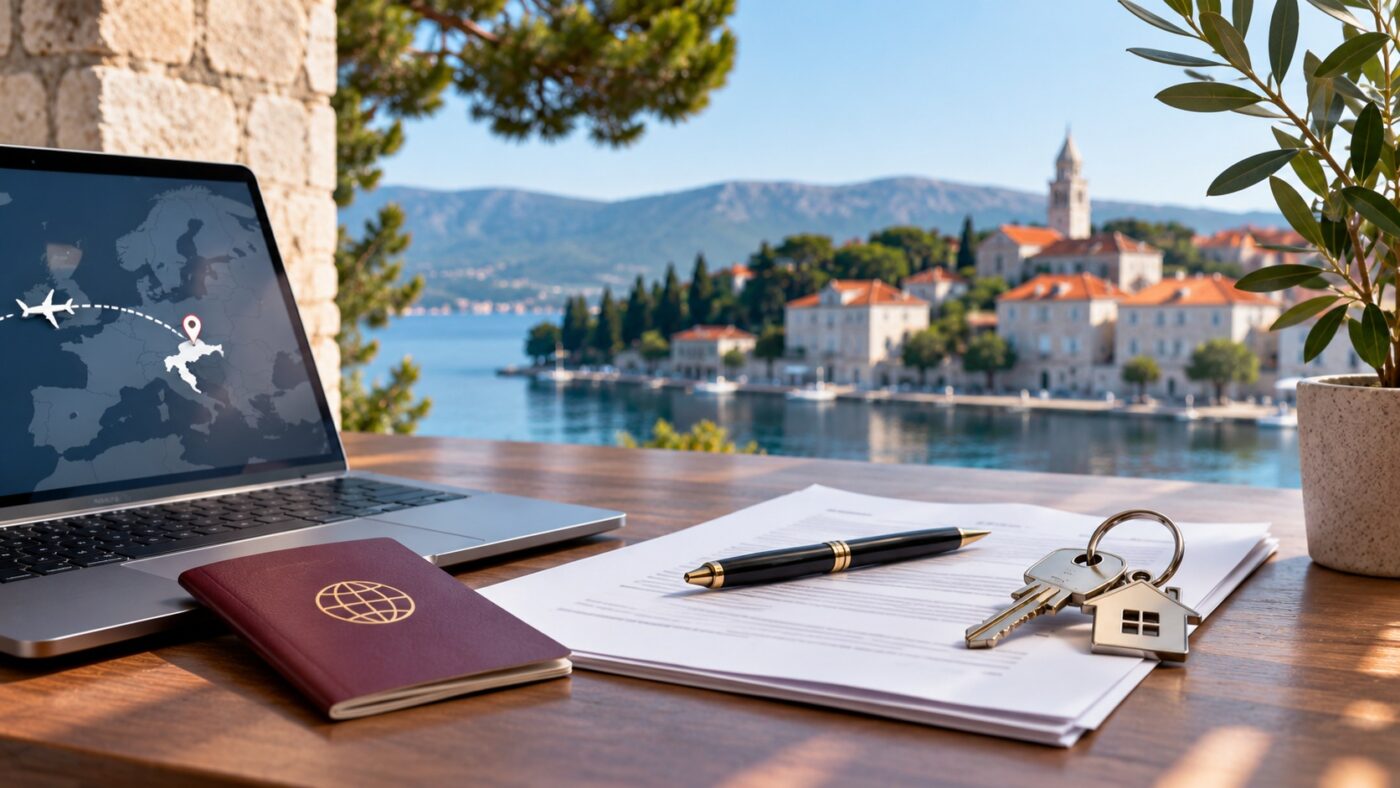
Do you own a house, apartment, holiday home or inherited property in Croatia but live in the United Kingdom, United States, Canada, Australia or another country? You may be wondering whether you need to travel to Croatia to sell your property.
The good news is that selling property in Croatia from abroad is generally possible without travelling to Croatia in person. With a properly prepared power of attorney and professional legal representation, many aspects of the transaction can be handled remotely.
A Croatian lawyer can assist with checking the property’s legal status, preparing the necessary documentation, drafting the sale and purchase agreement, coordinating with the buyer and protecting your interests throughout the transaction.
However, selling Croatian real estate while living overseas involves several important legal and practical considerations.
In this guide, we explain:
Yes. In most circumstances, you can sell property in Croatia without being physically present.
Croatian law allows property owners to authorise another person to act on their behalf through a valid power of attorney.
For example, if you live in London, New York, Toronto or Sydney and own an apartment on the Croatian coast, you can appoint a Croatian lawyer to handle the legal aspects of the sale.
Depending on the authority granted, your lawyer may be able to:
The scope of these activities depends on the wording and legal validity of the power of attorney.
Although remote sales are generally possible, banks and other institutions may require additional identity verification or direct participation by the owner in particular circumstances.
A power of attorney for selling property in Croatia is a legal document authorising another person to perform specified acts on behalf of the property owner.
It is particularly useful for foreign residents, Croatian emigrants and beneficiaries who have inherited property in Croatia but live abroad.
A properly drafted power of attorney should normally identify:
It is important to distinguish between authority to obtain documents and authority to sell the property or receive money.
A power of attorney should be tailored to the specific transaction rather than drafted as an unnecessarily broad general authorisation.
We recommend having the document prepared or reviewed by a Croatian lawyer before arranging notarisation abroad.
Yes, provided that the lawyer holds a valid power of attorney granting the necessary authority and that the applicable legal formalities have been satisfied.
The power of attorney must meet the requirements relevant to the intended legal transaction, including any applicable rules concerning the form and certification of signatures.
With appropriate legal representation, the owner may therefore avoid travelling to Croatia solely to execute the sale documentation.
One of the most common questions from overseas property owners concerns the legalisation of documents signed outside Croatia.
The exact procedure depends on the country where the document is signed, the owner’s nationality and the nature of the document.
Property owners living in England, Scotland, Wales or Northern Ireland may be able to execute a power of attorney before a suitably authorised notary or other competent professional.
Depending on the document and applicable requirements, an Apostille issued by the relevant UK authority may be required for use in Croatia.
A certified Croatian translation may also be necessary.
Before arranging the appointment, the owner should confirm that the intended certification procedure and wording will be accepted for the Croatian property transaction.
If you live in the USA, the power of attorney may generally be notarised by an appropriately authorised notary public.
Where an Apostille is required, the competent authority depends on the type of document and the relevant jurisdiction.
For documents notarised at state level, the Apostille procedure is generally handled by the appropriate state authority.
Because American notarisation practices vary between states, it is important to confirm the precise requirements before signing the document.
Owners living in Canada or Australia may also execute suitable powers of attorney through their local notarisation procedures.
Both countries participate in the Hague Apostille Convention, but the relevant issuing authorities and procedures differ.
Additional documentation or a certified translation may be required before the power of attorney can be used in Croatia.
In certain circumstances, Croatian citizens can arrange signature certification through a Croatian embassy or consulate abroad.
However, the availability of this service and applicable identity requirements should be checked directly with the relevant diplomatic mission.
Important: An Apostille is not automatically necessary for every foreign document. Applicable international agreements may remove or simplify legalisation requirements.
The safest approach is to have the Croatian lawyer confirm the required procedure before you notarise or send any documents.
Before selling a Croatian house, apartment or plot of land, the property’s legal status should be carefully reviewed.
Depending on the circumstances, the following documents may be required:
The Croatian land register is central to determining the legal ownership status of real estate.
A land registry extract generally contains three main sections:
Even if you have owned a Croatian property for many years, it is advisable to obtain a current land registry extract before beginning the sale.
Problems with ownership registration, mortgages or other encumbrances may delay the transaction.
A Croatian lawyer reviews the land registry, relevant ownership documents and other legal matters affecting the property.
Any discrepancies or obstacles can then be identified before the seller enters into binding commitments.
A power of attorney is drafted to reflect the particular property and the actions the representative needs to perform.
The owner receives instructions for signing and authenticating the document in their country of residence.
The seller and buyer agree on the purchase price, payment conditions, deadlines, any deposit and the intended handover date.
Additional arrangements may be necessary if the buyer is using mortgage financing or the property is already subject to a mortgage.
A properly drafted Croatian property sale agreement should clearly address:
The buyer pays the purchase price in accordance with the agreed contractual arrangements.
The agreement should protect the seller against transferring ownership before payment has been made or otherwise adequately secured.
Once the relevant contractual requirements have been satisfied, the necessary documents can be used to apply for registration of the buyer’s ownership.
Under Croatian law, ownership acquired through a real estate transaction is generally perfected through registration in the land register.
The practical handover of the property should be documented and coordinated separately.
One of the most important considerations when selling Croatian property from overseas is ensuring that the purchase price is paid securely.
The seller may wish to receive the funds directly in a UK, US, Canadian, Australian or other foreign bank account.
In principle, yes. The buyer and seller can agree on payment to a foreign bank account, subject to applicable banking and legal requirements.
Before signing the agreement, it is advisable to establish:
A tabular statement, commonly called tabularna izjava in Croatian, is a declaration consenting to the relevant registration of ownership in the land register.
It is a particularly important document in Croatian property transactions.
Depending on the transaction structure, the seller’s consent may be included in the sale agreement or issued separately once the purchase price has been paid.
Sellers should be particularly careful about issuing unconditional registration consent before receiving or adequately securing the purchase price.
Appropriate escrow or deposit arrangements may be considered in certain transactions.
The availability and suitability of these arrangements depend on the parties, the institutions involved and the applicable legal requirements.
A Croatian real estate lawyer can help structure the contractual payment and document-release conditions to reduce unnecessary risk.
Foreign property owners frequently ask whether they must pay Croatian tax when selling a house, apartment or inherited property.
The answer depends on several factors, including the type of transaction, how long the property has been owned and the seller’s tax residence.
Croatia generally imposes a real estate transfer tax of 3% of the property’s market value on acquisitions that are subject to this tax.
The statutory taxpayer is normally the buyer, rather than the seller.
For example, if the relevant market value is EUR 250,000:
EUR 250,000 × 3% = EUR 7,500.
In a standard taxable purchase, this is generally the buyer’s tax liability.
Some transactions are instead subject to VAT rules, depending on the nature of the property and seller.
Under Croatian personal income tax rules, income arising from the disposal of real estate may be taxable in certain circumstances.
As a general rule, an individual selling property more than two years after its acquisition is usually outside the ordinary Croatian income tax charge on that disposal, subject to statutory exceptions and special rules.
Different rules may apply to property that has been constructed, reconstructed or otherwise materially changed, as well as to multiple property disposals within a prescribed period.
For taxable disposals, the Croatian income tax rate applicable to income from property disposal is generally 24%, with the taxable amount determined in accordance with the relevant statutory rules.
The exact tax treatment must be assessed individually, particularly where the seller inherited the property or has undertaken several property transactions.
Possibly.
The sale of Croatian property may have tax consequences both in Croatia and in the country where the seller is tax resident.
For example, UK tax residents may need to consider applicable UK capital gains tax and reporting rules, while US taxpayers may have federal or state tax reporting obligations.
The tax treatment can be affected by domestic laws, tax residency, exemptions and applicable double taxation agreements.
It is advisable to obtain coordinated Croatian and home-country tax advice before completing the sale.
Selling inherited property in Croatia is particularly relevant to members of the Croatian diaspora and descendants of Croatian families living abroad.
Many individuals in the UK, USA, Canada and Australia have inherited family houses, coastal apartments or land in Croatia.
However, inherited properties may present additional legal complications.
The inheritance documentation and the legal basis for registering ownership must be reviewed.
In some cases, an existing final inheritance decision may provide the necessary basis for registration.
Other situations may require further legal steps, particularly where inheritance proceedings took place abroad or ownership records are incomplete.
Yes.
If several heirs jointly own the property, a sale of the entire property generally requires the participation of all co-owners or their duly authorised representatives.
Individual co-owners may be able to dispose of their respective ownership shares, subject to applicable restrictions.
A Croatian lawyer can coordinate the documentation and legal requirements when heirs live in several different countries.
In many cases, yes.
Once the relevant inheritance and ownership requirements are satisfied, the sale can often be organised through a properly authorised Croatian representative.
However, outstanding inheritance issues may need to be resolved before the transaction can be completed.
Yes. A registered mortgage does not automatically prevent the owner from selling the property.
However, the outstanding secured debt and release of the mortgage must be addressed in the transaction.
Depending on the circumstances, the parties may agree that part of the purchase price will be paid directly to the lender.
The lender may then provide the appropriate documentation allowing the mortgage to be removed from the Croatian land register once its conditions have been satisfied.
The sale agreement should clearly regulate the payment procedure and the obligations of all parties.
This is especially important when the seller lives abroad and cannot personally coordinate with the bank.
Although selling property from abroad is possible, remote transactions require careful preparation.
A document may not grant sufficient authority or may fail to meet the applicable formal requirements.
The seller may not be properly registered as owner, or the land registry may contain restrictions that affect the sale.
Issuing unconditional land registration consent before payment is received or secured may expose the seller to unnecessary financial risk.
Unclear payment deadlines, insufficient contractual protections or poorly defined handover conditions can result in disputes.
Problems with building permits, extensions or the legal status of a property may cause delays and complications.
The seller may fail to consider Croatian taxation or reporting requirements in their country of residence.
Bank compliance procedures, documentation requirements or currency conversion arrangements may affect completion.
Many of these risks can be identified and addressed through legal due diligence before the seller signs a binding agreement.
There is no single timeframe applicable to every Croatian property sale.
Where ownership records are clear, the power of attorney is valid and the buyer has funds available, the legal steps can often be organised efficiently.
However, the process may take longer when additional issues arise, such as:
A preliminary legal review can help identify potential delays and establish a practical plan for completing the transaction.
Selling a property in another country can be challenging, particularly when you are unfamiliar with local legal procedures and cannot attend meetings in person.
An independent Croatian lawyer can represent your legal interests throughout the transaction.
Legal services may include:
With appropriate legal representation, foreign-based property owners can often complete a Croatian property sale without unnecessary travel.
Yes. In many cases, a UK-based owner can sell Croatian property through a suitably authorised Croatian lawyer without travelling to Croatia. The power of attorney and supporting documents must satisfy the applicable legal requirements.
Yes. US-based owners can generally arrange remote representation through a valid power of attorney. Notarisation, Apostille and translation requirements should be confirmed before signing.
Not necessarily. A properly authorised representative may sign the relevant documents on your behalf, subject to applicable formalities and any additional institutional requirements.
In principle, yes. The payment arrangements should be set out in the sale agreement and checked with the relevant banks in advance.
The buyer generally pays the 3% real estate transfer tax where applicable. The seller may separately have income tax obligations depending on the circumstances, including the period of ownership and applicable statutory exemptions.
Yes, provided that the necessary inheritance and ownership documentation is in order and the relevant legal requirements have been satisfied.
All relevant ownership interests must be considered. A sale of the entire jointly owned property generally requires the participation or proper representation of every co-owner.
A Croatian personal identification number (OIB) is relevant to property transactions and associated official procedures. If you do not have one, the requirements for obtaining it should be checked before proceeding.
A Croatian lawyer may handle many of the legal aspects of the sale under a suitable power of attorney. The exact scope depends on the authority granted and the requirements of the transaction.
Whether you are selling a holiday home on the Croatian coast, an apartment in Rijeka, an inherited family house in Istria or land elsewhere in Croatia, professional legal assistance can help make the transaction more secure and manageable.
Law Office Andrej Bašović, based in Rijeka, Croatia, provides legal assistance to Croatian and international property owners, including clients who live abroad and wish to sell their property remotely.
Our legal assistance may include:
We understand that overseas owners need clear communication, reliable legal advice and an efficient process that minimises unnecessary travel.
Our objective is to help you navigate the Croatian legal requirements while protecting your interests throughout the property sale.
Selling property in Croatia from abroad is generally possible with appropriate legal preparation and representation.
The most important steps include verifying ownership, preparing a valid power of attorney, drafting a legally sound sale agreement, arranging secure payment and addressing any relevant tax obligations.
Additional attention may be necessary when dealing with inherited properties, multiple owners, mortgages or incomplete documentation.
With professional legal assistance, property owners living overseas can often organise and complete the sale without personally travelling to Croatia.
Are you living in the UK, USA, Canada, Australia or another country and planning to sell property in Croatia?
Whether you own an apartment, holiday home, family house, inherited property or land in Croatia, you are very welcome to contact Law Office Andrej Bašović in Rijeka for legal assistance.
We can help you review the property documentation, prepare the necessary power of attorney, draft the sale agreement and coordinate the legal aspects of the transaction.
Our aim is to make the legal process as straightforward and secure as possible, helping you sell your Croatian property without unnecessary travel or administrative complications.
Please feel free to contact our law office to discuss your situation and find out how we can assist you.
Law Office Andrej Bašović
Attorney at Law
Pomerio 19
51000 Rijeka, Croatia
Visit our website and contact our law office
We welcome enquiries from international property owners seeking legal representation in Croatia.
Disclaimer: This article provides general information about Croatian property transactions and does not constitute legal or tax advice for a particular case. Legal requirements and tax consequences should be assessed according to the circumstances of each transaction.
A representative from our office will get in touch with you as soon as possible.