
Buying Off-Plan Property in Croatia: Protect Your Payments
14/08/2026
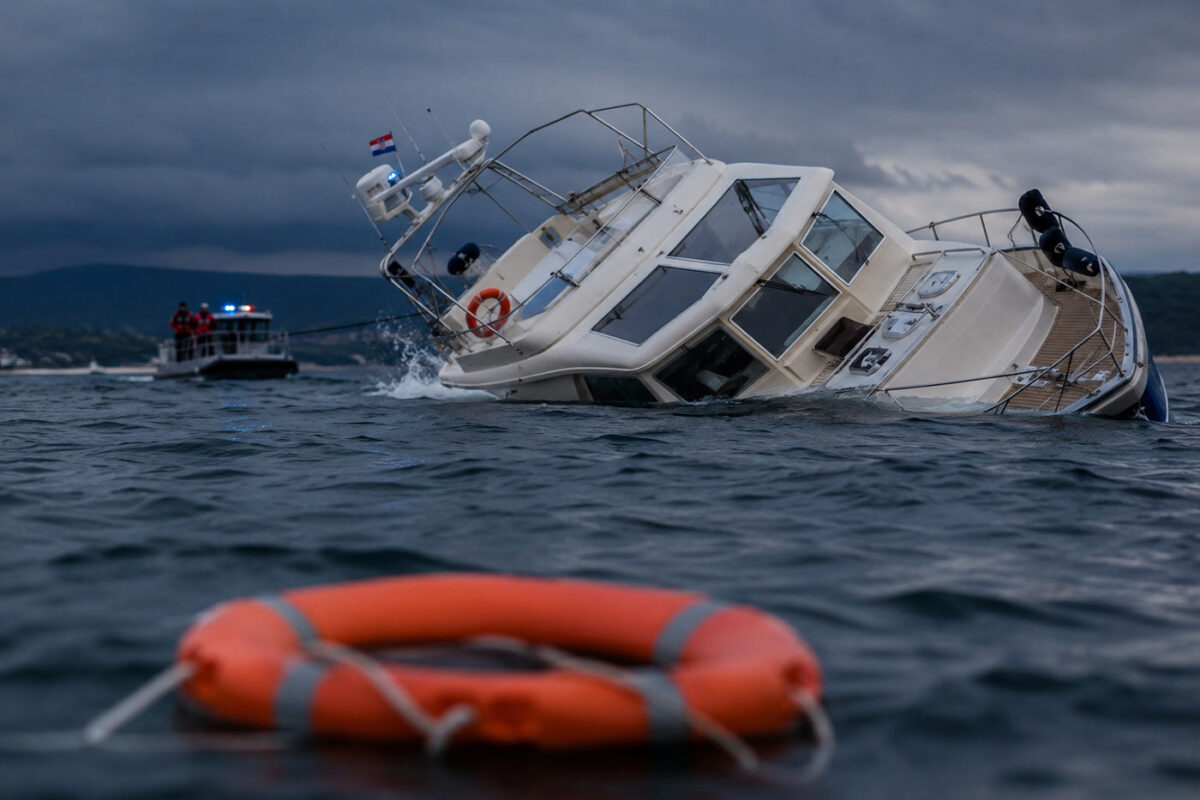
Following a maritime accident in Croatia, repairing the vessel or notifying the insurer may not be enough. It is also necessary to establish how the accident occurred, who may be liable, what evidence should be preserved and against whom a compensation claim can be made.
Liability may depend on numerous factors, including how the vessel was operated, compliance with navigation rules, the vessel’s technical condition, weather conditions, the conduct of the crew, the charter agreement and the terms of the applicable insurance policy.
This guide explains what to do after a maritime accident in Croatian waters, what types of compensation may be available and why taking timely legal action is important.
A maritime accident does not necessarily involve a collision between two large commercial ships. It may include any incident connected with navigation or the use of a vessel that causes personal injury, death, property damage or marine pollution.
Common examples include:
The legal consequences depend on the circumstances of the particular incident. The same event may raise issues of civil liability, insurance coverage, contractual liability and liability for a maritime offence.
The first steps taken after an accident may be crucial both for the safety of those involved and for establishing liability at a later stage.
The first priority is always to protect human life and prevent further danger. If anyone is injured or there is a risk of fire, flooding, sinking or another serious emergency, the competent emergency and maritime rescue services should be contacted immediately.
Anyone who has suffered an injury should obtain medical assistance, even if the injury initially appears minor. Some injuries, particularly those affecting the head, spine or soft tissues, may become apparent only later.
Depending on the nature and seriousness of the incident, the competent Croatian harbourmaster’s office or its local branch should be notified. Harbourmaster’s offices perform duties relating to navigation safety, inspections, search and rescue, and the registration of vessels.
If an official inspection is carried out or an accident report is prepared, a copy of that documentation should be obtained. It may become important evidence in a subsequent insurance claim or court proceeding.
If it is safe to do so, photograph or record:
Photographs and recordings should be preserved in their original form. Their time and location data may later assist in reconstructing the incident.
Record the details of the vessel owner, the person operating the vessel, the charter company, the marina and the relevant insurer, where known.
Ask witnesses for their full names and contact details. A short written account prepared immediately after the incident may be considerably more reliable than an attempt to reconstruct events several months later.
The other party, charter company, marina or insurer may ask you to sign an accident report or statement.
Before signing, verify that the document accurately describes what happened. Check whether it contains an admission of liability, a waiver of claims or acceptance of a particular amount of damage.
Foreign nationals should be especially cautious when asked to sign a document written only in Croatian or in another language they do not fully understand.
Liability is not determined simply by considering which vessel suffered greater damage. The cause of the accident and the conduct of everyone involved must be examined.
Depending on the circumstances, the responsible party may be:
More than one party may share responsibility for the same accident.
For example, one vessel may have failed to comply with a right-of-way rule, while the other vessel may have been travelling at an unsafe speed. In that situation, it may be necessary to determine the extent to which each party’s conduct contributed to the collision.
Following a collision between vessels, it is important to establish whether those operating the vessels complied with collision-avoidance rules and acted with the level of care expected from a prudent seafarer.
The investigation may consider:
If the collision was caused exclusively by the fault of one vessel, the responsible party will generally be liable for the resulting damage. If both parties made mistakes, liability may be divided according to their respective contributions to the accident.
Where the cause is disputed or cannot be established from the available documents, a maritime or technical expert may be required to reconstruct the incident.
A common misconception is that a marina is automatically responsible whenever a boat or yacht is damaged at its berth.
The marina’s liability depends on the contract, the services it agreed to provide and the cause of the damage. A simple agreement for the use of a berth must be distinguished from an arrangement that includes supervision, custody or other specific obligations.
When assessing liability, it may be necessary to determine:
A contractual exclusion of liability is not necessarily effective in every situation. Its legal effect should be assessed in light of the agreement, the circumstances of the accident and the applicable law.
A claim concerning damage to a charter vessel may involve the charter company, the charterer, the vessel owner and one or more insurers.
A charterer’s liability cannot be properly determined solely from the fact that the vessel was damaged during the charter period.
Before accepting liability or agreeing to pay for repairs, the following should be reviewed:
The charter company should be able to establish the existence and extent of the damage, as well as the legal and contractual basis on which the charterer is allegedly liable.
Retention of the entire security deposit is not automatically justified merely because damage was discovered when the yacht was returned.
The available compensation depends on the nature of the accident, the applicable legal basis and the losses that can be proven.
A property damage claim may include:
If the extent of the required repairs is disputed, the claim should not necessarily be based on only one shipyard or repairer’s estimate. In cases involving substantial damage, an independent inspection should preferably be carried out before repairs begin.
An owner who uses the vessel for commercial purposes may, depending on the circumstances, claim compensation for demonstrable loss of income.
In the case of a charter yacht, this may include confirmed bookings that had to be cancelled while the vessel was being repaired. The claimant must generally demonstrate that the bookings existed, that the loss could not reasonably have been avoided and that it resulted from the particular accident.
A general assertion that the vessel could not be used for a certain period is usually insufficient to prove the amount of lost profit.
Depending on the applicable legal framework and the circumstances of the accident, an injured person may be entitled to seek compensation for:
The claim should be supported by complete medical records. An injured person should seek medical assistance promptly and ensure that all symptoms and consequences are properly documented throughout treatment.
An insurance policy may cover damage to the insured vessel, liability toward third parties or both. The actual scope of coverage depends on the policy and its applicable insurance terms.
After an accident, it is important to review:
The insurer should be notified promptly and given an opportunity to inspect the vessel before repairs begin, unless emergency work is necessary to prevent further damage.
Before accepting an insurance settlement, verify whether the proposed amount covers the entire loss and whether acceptance would involve waiving any further claims.
The following evidence may be particularly important:
Damaged parts and equipment should not be discarded before they have been documented and, where appropriate, inspected.
Before major repairs begin, the other party and the relevant insurer should generally be given an opportunity to inspect the damage, provided that doing so will not increase the loss or place the vessel in danger.
Maritime disputes can involve special limitation periods, international elements, multiple insurers and several potentially liable parties. For that reason, obtaining a legal assessment should not be postponed.
The reporting obligation depends on the nature and seriousness of the incident. The competent authority should be contacted without delay in cases involving a collision, personal injury, significant property damage, pollution or a threat to navigation safety.
Liability cannot be established merely because the damage occurred in a marina. The marina agreement, suitability of the berth, condition of the equipment, conduct of the marina and vessel owner, weather warnings and foreseeability of the event must all be considered.
The existence of damage does not automatically entitle the charter company to retain the entire deposit. The company should establish the charterer’s responsibility, the extent of the damage and the contractual basis for the amount retained.
Necessary measures should be taken to prevent further damage. Before complete repairs are performed, however, the damage should be properly documented and the insurer, responsible party or independent surveyor should be given an opportunity to inspect it.
The duration depends on the complexity of the accident, the available evidence, the insurer’s position and whether expert evidence is required. Simpler claims may be resolved through settlement, while disputes concerning liability or the amount of damage may require court proceedings.
A foreign-registered vessel may raise questions concerning applicable law, jurisdiction, insurance and service of legal documents. The appropriate strategy depends on the place of the accident, the vessel’s flag, the parties involved and the relevant contractual relationships.
A maritime accident in Croatia can result in substantial repair costs, loss of income, personal injuries and a prolonged dispute with the other party or an insurer.
To protect a compensation claim, it is important to safeguard those involved, report the incident, document the accident scene, preserve technical data and identify all potentially responsible parties.
Particular attention should be paid to the charter agreement, marina contract and insurance policy. Liability always depends on the circumstances of the individual case, while the loss of evidence or expiry of an applicable deadline may significantly affect the ability to obtain compensation.
Andrej Bašović Law Office provides legal assistance to boat and yacht owners, charter companies, charter guests, passengers and other parties involved in maritime accidents in Croatia.
Our legal services may include assessing liability, reviewing charter and marina agreements, examining insurance coverage, preparing compensation claims, negotiating with insurers and representing clients in court proceedings.
If you have been involved in a maritime accident or your vessel has been damaged in Croatia, contact us as soon as possible so that the evidence can be preserved and your legal rights protected in time.
A representative from our office will contact you as soon as possible.